Boring where it counts
Established tools with long support histories carry less risk than novel ones. Novelty is reserved for the part of the system that genuinely requires it.
Software engineering · Est. as HAPPY ALINA LTD
HAPPY ALINA LTD designs and builds software for organisations whose daily operations depend on it. We work in small, accountable engineering teams, write code that other engineers can read, and explain every technical decision in plain language.
Positioning
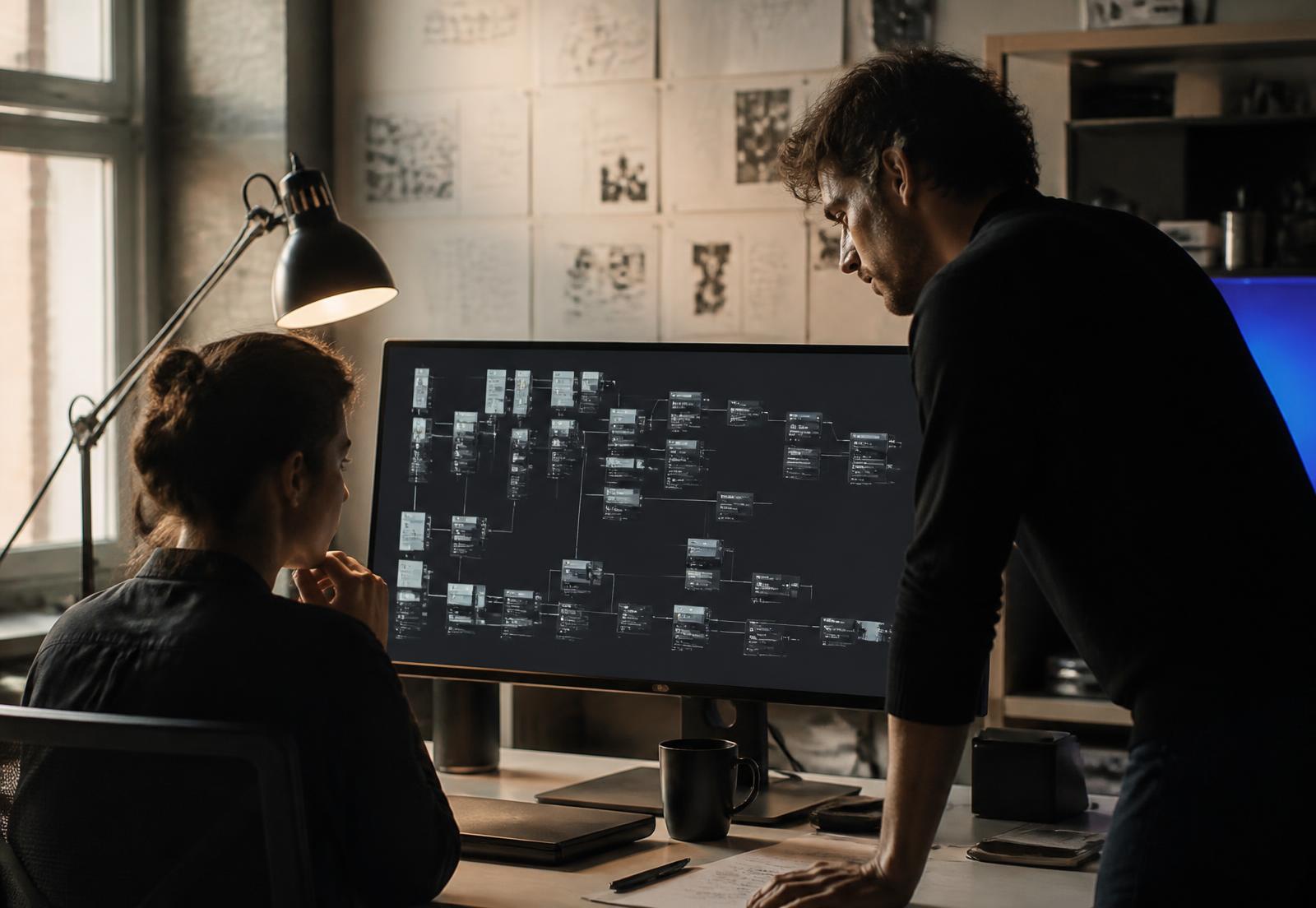
We are an engineering company, not a marketing one. Our value shows up in software that behaves predictably under load, in documentation someone can act on months later, and in estimates that hold because the unknowns were investigated first.
Capabilities
A deliberately narrow set of capabilities, practised repeatedly rather than advertised broadly.
Domain modelling, service boundaries and data design that keep future change affordable.
Accessible, responsive interfaces with server-rendered content and measured performance budgets.
Managed infrastructure defined as code, with reproducible environments and automated deployment.
Relational schema design, migration strategies and reporting pipelines that stay auditable.
APIs, message flows and adapters that let separately owned systems exchange data reliably.
Test suites, static analysis and pipeline checks that run on every change, not on request.
Services
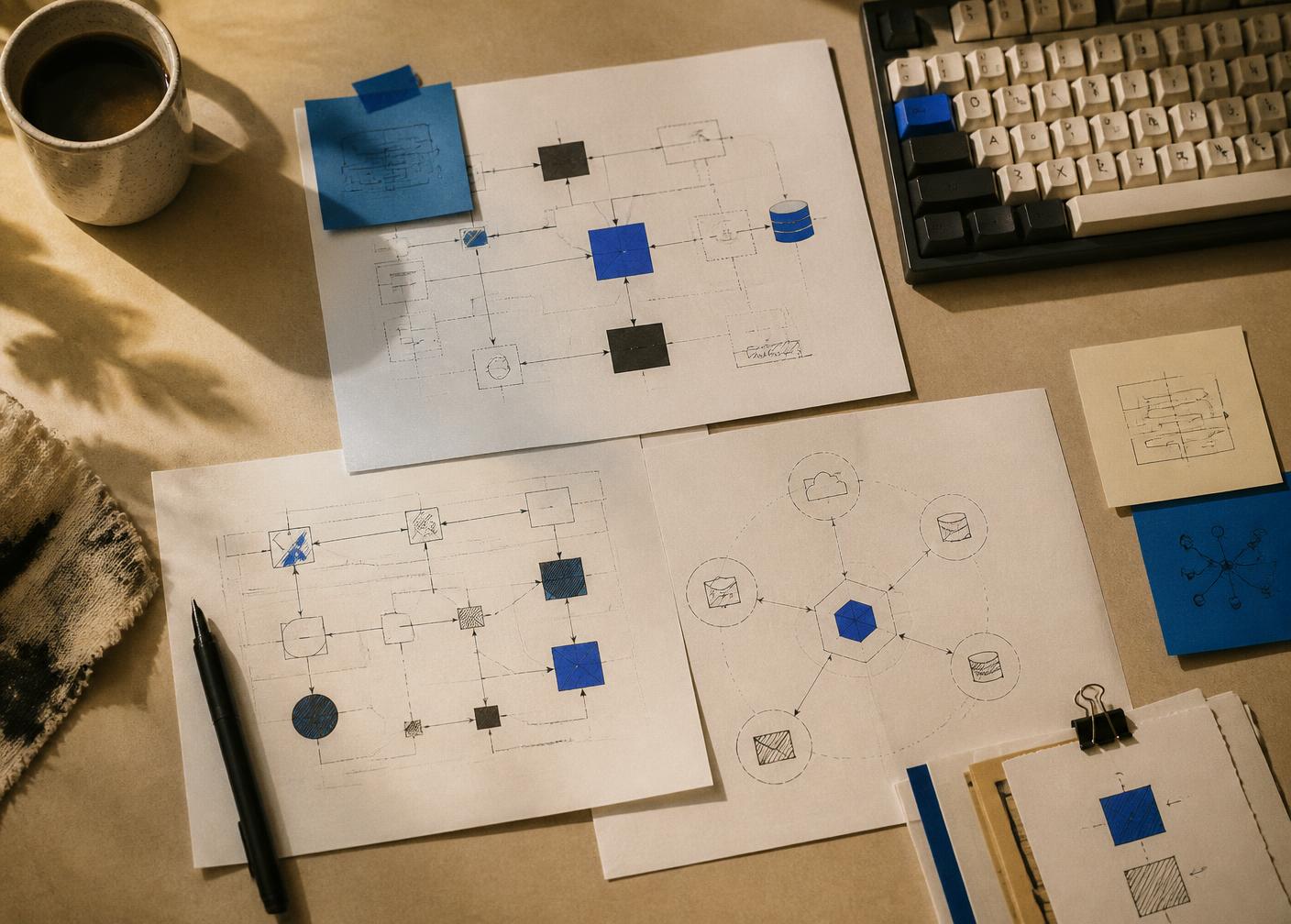
Each service is described in full on the Services page, including typical deliverables and the situations it suits.
Problems we are asked to solve
Spreadsheets, copied files and re-typed records holding a process together, with no single record of truth and no audit trail.
Working software whose behaviour is undocumented, so every modification carries unknown risk and releases are postponed.
Separate applications holding overlapping data, kept in step by hand because no interface exists between them.
Response times and job durations rising as data volume increases, with no measurement in place to show where the time goes.
Deployments performed manually, at unusual hours, with limited ability to verify the result or return to a known state.
A proposed initiative where the technical feasibility, sequencing and cost drivers have not yet been examined in detail.
Process
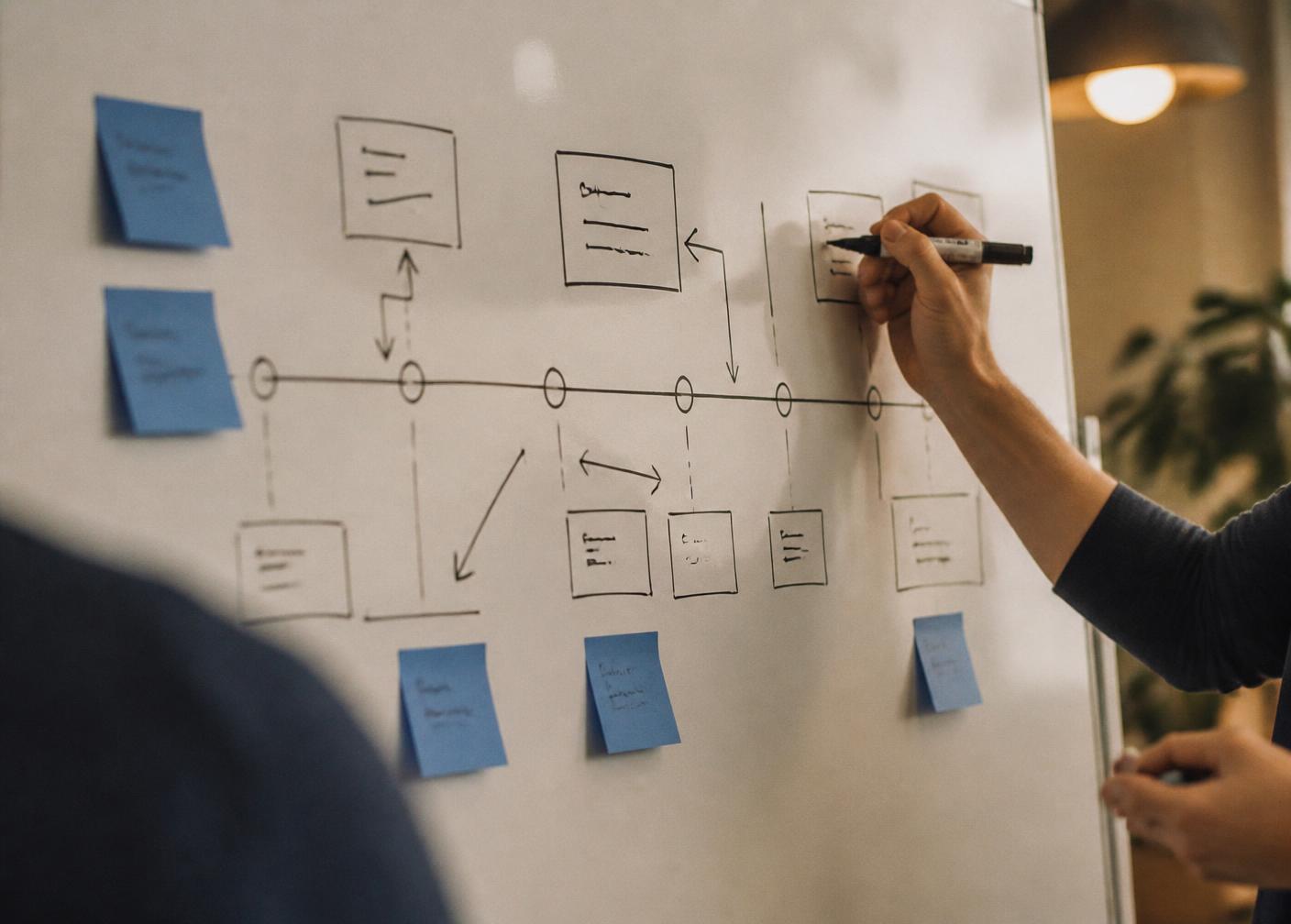
The sequence stays the same whether the scope is a single integration or a multi-quarter platform. Only the depth of each stage changes.
Stage 01
We read the existing systems, data and constraints, then write down what we understood and where we are still uncertain.
Stage 02
Deliverables, sequence, technical assumptions and open decisions are documented so the plan can be reviewed before work begins.
Stage 03
Repository, environments, pipeline, test harness and observability are established before feature work starts.
Stage 04
Work lands in short cycles. Each cycle produces something that runs, is reviewed and is described in writing.
Stage 05
Automated tests, manual review against acceptance criteria and load-relevant checks run before any release candidate.
Stage 06
Deployment is automated and repeatable, with a documented path back to the previous known-good version.
Stage 07
Monitoring, defect handling and incremental improvement continue for as long as the agreed support scope runs.
Engineering principles
Established tools with long support histories carry less risk than novel ones. Novelty is reserved for the part of the system that genuinely requires it.
Code is read far more often than it is written. We optimise for the engineer who opens the file next year without context.
Performance, error rates and resource use are instrumented so that decisions rest on figures rather than impressions.

Security & quality
Security and quality are treated as properties of the delivery process rather than as a final inspection. The practices below apply to the work we control, and we describe their limits honestly rather than promising outcomes we cannot guarantee.
Applicable contexts
These are the categories of work our capabilities suit. They describe the type of problem, not a claim about existing engagements.
Internal tools that replace manual coordination with a shared, auditable record of work in progress.
Systems where retention, access control and traceability requirements shape the design from the start.
Environments running several purchased and in-house systems that need dependable interfaces between them.
Customer-facing applications where responsiveness, accessibility and release cadence affect adoption.
Long-lived software that still delivers value but resists change until its structure is improved.
Reporting layers that need consistent definitions, repeatable calculations and predictable refresh behaviour.
Working together
Engagements are shaped around how much of the technical responsibility sits with us and how much stays with your team.
Considerations
Reasons stated as commitments about our own conduct, since claims about results depend on circumstances we do not control.
Decisions, assumptions and risks are recorded where both sides can revisit them, which keeps expectations aligned as the work evolves.
Source code, infrastructure definitions, documentation and credentials belong to you and are handed over in a usable state.
When new information changes the plan, we say so early and present the options rather than absorbing it silently.
You speak with the engineers doing the work. There is no relay of information through an account layer.
Tests, logs, deployment automation and documentation are part of the build, not a later phase that never arrives.
If a request is outside our competence, or the approach seems unwise, we say so and explain the reasoning.
FAQ
Contact
A short description of the system, the problem and the outcome you need is enough for us to reply with useful questions. Full contact details are also listed on the Contacts page.